
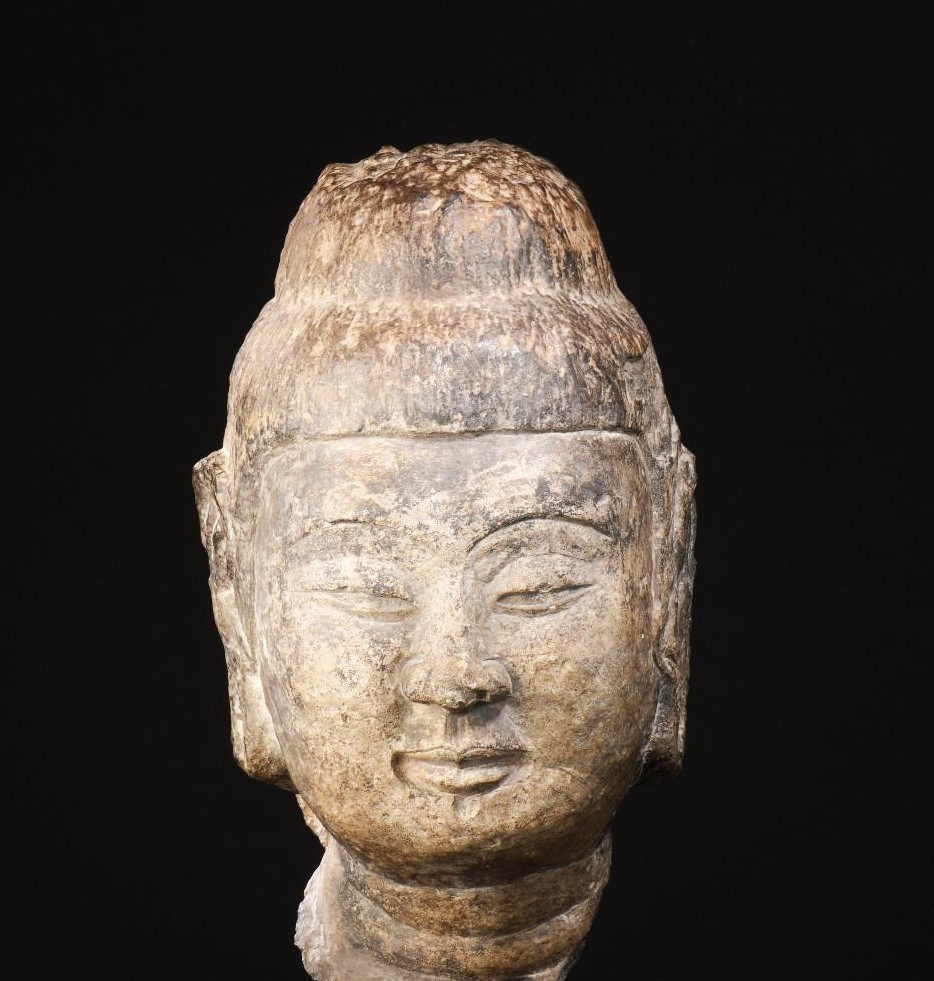
Some people were born for the campfire. You know the kind I mean, the romantic type, who can spin a rousing dramatic monologue from a brief wait at the bus stop. While the rest of us toil in plain old reality, life for these raconteurs appears a neverending string of fanciful episodes, each more improbable than the last. Can the world really be so charmed for some, or is it all in the eye of the beholder, hidden till one only looks? On the other hand, do they simply want attention, embellishing every little detail on behalf of the sublimated ego? Good storytellers are rarely short of company, after all.
I can only speculate indirectly, for my cousin Marvin is this type to a tee. The authenticity of his claims is anyone’s guess, but one is never sorry to see him at a function, and Marvin is never without an invitation. It’s become a sort of game at parties to hover around his conversations and wait to see what unlikely prompt will set things off this time. An unsuspecting guest across the dinner table might offhandedly comment on the bent prong of their fork, and Marvin, overhearing, will be seen to smile with a twinkle in his eye before interrupting to ask, with perfect politeness, but knowing full well what the answer will be, that surely he must have told them the one about the haunted silverware.
In fairness, Marvin is rarely the protagonist of his own stories, which typically recollect secondhand the exploits of the brother-in-law of a mutual friend of a former business associate, or some equally thin connection. As such, the charge of embellishment may be misplaced even if justified. Perhaps Marvin is nothing more than a great impersonator, vicariously indulging to spread the many fictions of the more questionable types who cross his path for the sake of his own amusement, and ours. In which case I am hardly one to judge.
I will give you an example. Last summer my younger sister came into some money and decided to relocate to the rather charming village of Golightly, west of the Fowey river, and she had the whole family over for a housewarming. She’d never had her own garden before, and was naturally filling this one with many decorative ornaments, stones, birdbaths, and so on.
At one point in the proceedings I was left alone with Marvin, relegated to smoke our cigarettes in the front driveway, when my sister’s husband arrived, returning from an errand. Helping him unload the car, we saw that among their new purchases for the garden was a large stone Buddha statue, its location as yet unassigned. At once I identified the twinkle in Marvin’s eye, and noted curiously his unusual discipline in remaining silent at the time.
Later, over dinner, a brief lull in conversation provided him his moment. Surely, he insisted, apropos of nothing, surely we all hadn’t gone these long years together as cousins without him once telling any of us the story of Gilbert Wise, his former business associate, a notoriously hot-tempered fellow who moved to the coast on the advice of physicians in the hopes of alleviating his blood pressure?
When the rest of us, playing our part, all assured him we had heard of no such fellow before, Marvin smiled graciously and made many apologies for having unwittingly deprived us of so strange and sorry a tale. Dabbing his napkin at the corners of his mouth, he cleared his throat in the new silence of the room, straightened in his seat, and began.
One day, following a series of cardiovascular near-misses, Mr Gilbert Wise and his long-suffering wife Hattie upped sticks from their city apartment of thirty years to a detached bungalow in the quaint seaside neighbourhood of Bognor Regis. Peace and quiet was to do his heart wonders, to the tune of up to two more decades of steady pumping, with a little luck, and provided of course that he could match the serenity of his new surroundings with an equivalent good humour.
A proud pragmatist, Wise wasted no time once settled in devising a strict daily routine guaranteed to hasten his relaxation. Exercise and diets he could handle, but the constant refrain of the doctors was that his ailments were at root emotional, psychic. They’d sent him to all manner of experts in the new science of wellbeing and he had written off every one, if not as a quack then an outright charlatan or, worst of all, a genuine bleeding heart. So incensed was he by their proselytizing that at times he began to doubt he might not make a more cheerful cadaver. But then, he would each time perceive again the face of his wife as she had appeared at his hospital bedside, gazing out the window unable to meet his eyes, and feel chilled by a terrible coldness.
One other kernel from those days remained oddly stuck in his mind. He had always thought it in bad taste, an unsightly curiosity of the hospital room, but then, private institutions could make their own style considerations. It had been placed on the windowsill, turned in to face the room, a sitting Buddha ornament of grey stone laid there by who-knows-who, presumably some liberal-minded young orderly or other. The Buddha was cross-legged with his hands on his knees, the softest of smiles, and no pupils in his stone eyes, which never blinked and never looked away.
It was a sight which took Mr Wise back years. In another life, he had sojourned in Maharashtra, India, in the Khandesh region by the Western Ghats, wandering there through monumental caves of ancient, sacred art. He could still recall the monks lined up in robes of pristine marigold, perched like blissful flowers before the intricate murals. How alien their piety had seemed… even today, an old man, he could recognise so little of such devotion in himself. The mental discipline, the strength of spirit to control one’s feelings so discreetly was inspirational, but seemed hopelessly far from reach.
In the years since, he had known others too who swore to the healing power of meditation, but still the activity itself had never held practical weight in his mind. Sitting down doing nothing all day seemed such a clear waste of time that the idea alone enraged him. What virtue could deliberate inactivity hold to a man whose remaining time on Earth was so evidently running short? He had even tried it once, though never admitting it, and found himself unable to go more than five minutes without becoming completely overwhelmed by consideration of all the work he could otherwise be doing.
Wise was having another of his bleak days when, on Hattie’s insistence, the two visited a local reclamation yard in search of attractive pieces for their new home. It was late summer and the garden, though undeniably lovely, was looking empty. Wise was grumbling along pretending to take interest in the various ephemera of the yard when suddenly one item absorbed his full attention. No sooner had he laid eyes on it than all the other sights and sounds of the day fell away to a haze, and he walked as if summoned straight from his distracted wife to stand closely before it.
It was a stone sitting Buddha about two feet high, all but identical to the piece he recalled from his hospital room, only larger and with a weathered inscription on its base in a language he couldn’t identify. Looking into those unblinking eyes, Wise felt for the first time since longer than he could recall the sense that inner peace might not be a myth, but something really attainable; something that might be his.
He bought it for a song, and for the next few days, nothing could sway Wise’s focus. He refurbished the little shed at the end of the garden, clearing out the dust and cobwebs and fixing the broken door, which banged in the slightest wind even with the outside latch on. Meanwhile, he read much about the art of meditation, finding that it was not so simple as sitting and doing nothing. Western scientists had even proved that regular mantra meditation for example could yield unparalleled results for patients in reducing the risk of heart disease, though no one quite knew why. The idea was to choose a Sanskrit word whose meaning was foreign to the meditator, such that they were not contemplating the definite concept but the sound-vibration itself, thus inducing a trance-like state of bodily rest as many as three times as rejuvenating as deep sleep.
The catch was that it would only work if one chose the ideal mantra for their person. Most resources strictly advised seeking the guidance of a guru master to this end, but Mr Wise assumed, no doubt correctly, that such a person would be hard to come by in Bognor Regis. He hit upon the rather ingenious solution of purchasing a Sanskrit dictionary written in a language he did not know, thus providing phonetic pronunciations without comprehensible definitions. Then he simply chose a word which stood out to him and felt correct; this took him several attempts. Eventually he settled on raksashana.
(Here cousin Marvin took a long pause before whispering the word once more, and then continuing.)
The next morning, Mr Wise rose with the dawn to leave his wife asleep and headed to the shed at the end of the garden carrying an egg timer, a chair, and a cushion. Locking the door behind him, he sat in the small darkened room with his eyes lightly closed, his back straight, and his chest out to ensure a steady flow of breath. Then he quietly chanted raksashana until the egg timer pinged at twenty minutes.
Wise opened his eyes. He stood up. He unlocked the door and stepped out into the garden, feeling the cool summer breeze and the warmth of the sun, and knew that he had never felt better in his life.
Not a day went by from that moment forth that Gilbert Wise did not meditate once before breakfast and once before supper for twenty minutes apiece. As summer turned to autumn and the days began to recede he remained ever diligent, rain or shine, even as temperatures fell and his wife insisted he would catch his death of cold out there alone in that box.
She more than anyone could appreciate the change in him, of course, whether or not the stone Buddha was exactly to her aesthetic tastes. Each time Wise passed it on his way to and from the shed, he would rub it on the head, and wonder casually what the inscription on its front had once said. Hattie would watch proudly from the kitchen window, and each time the stone Buddha would stare unblinking and smile its soft permanent smile.
One evening as the sky grew dark, a peculiar fog fell over the town. Wise could hardly see two feet in front of him as he traversed the garden to reach the shed for his evening meditation, though of course, by now he knew the route by heart. At the usual spot where he would pat the Buddha’s head, he lowered his hand instinctively to feel for it but found instead that he was grasping only air. Wise looked down, swiping at the fog which even at his ankles was thick enough to partly obscure the ground, until his hand met cold stone and the form of the Buddha became visible to him all at once.
He nodded to himself, perhaps by way of reassurance, for the initial impression he had had was plainly impossible. The thing was, it had seemed to him exactly as if the Buddha had disappeared at one moment and come back the next. Wise could accept that given the fog there was at least a chance he might have reached for the head at the wrong spot, though he knew in his heart that he had since committed the whole thing to muscle memory. A chance, however unlikely; but it had not felt like that. What it had felt like was that Buddha had been gone until Wise had lowered his gaze to check.
In the face of the impossible, of course, one can only conclude the alternative. Wise chuckled quietly at his mistake and hurried to the end of the garden.
In the shed, pitch dark now without the usual hint of sunlight from outside, he began his usual routine, shivering mildly at the sense of unease in his heart. Things soon settled however, and he fell deep into the practised rhythm of the meditation, deeper this time than usual. Often he found that the more tension he entered in with, the more profound the relaxation, but this was on another level. Chanting raksashana, raksashana, raksashana over and over, Wise began to witness himself drifting in his mind’s eye, totally at peace, like a feather floating on the air, and he had reached just over halfway through when he heard the latch outside the shed door slide shut.
Now, Hattie Wise was in such step with her husband’s strict routine that it did not take her long to notice him fail to come back up the garden for supper at the usual time. The fog had all but cleared by then, but as she made her trip to check the shed she still did not register the absence of the stone Buddha from its usual spot. At least, she did not notice herself noticing; perhaps some part of her did.
In the wife’s version of events, she knew it by the locked door. They say one can tell these things by intuition, just before they happen, with a spouse or similar loved one. One hears such stories about pets too. When Hattie removed the latch, it revealed her husband sprawled out in his chair with his hand stiffly clutched over his heart. Before his feet sat the stone Buddha, and the inscription on its base was not weathered at all, in fact, it never had been, in fact its words were as clear and loud as anything, carved with steady ancient hands in raw unspoken English: NOW HIS HEART IS AT PEACE.
And the stone Buddha smiled.
Though my sister is well accustomed to the nature of my cousin’s stories, the same is not so true of her husband, who it turned out was the one to actually purchase the statue, having a lifelong passion for eastern philosophy. As such he was less receptive to the whole experience, and we all got to amuse ourselves watching Marvin spend the rest of the party failing to assure him that of course he had nothing to worry about since their stone Buddha had no inscription.
The funny thing is, I met Gilbert Wise, just once, some years prior at one of Marvin’s high-stakes poker games back when they’d been working together. I’d been warned he was a rather angry sort, and while a single evening of poker is hardly sufficient opportunity to get to the heart of any man’s character, I must say that at that time, the reputation seemed well earned. He really did die of heart failure, too, and his poor wife really did find him.
Later I asked cousin Marvin if he knew what ‘raksashana’ meant, and he said he hadn’t the foggiest idea. I’ve since looked it up, and while I couldn’t find any examples of that particular construction, it is a fact that rākṣasa is a Sanskrit term referring to ‘a class of malignant shapeshifting demons in Hindu mythology, often depicted as monstrous fanged humanoids with a taste for human flesh’.
Reader, make of that what you will.
2 responses to “Marvin’s Morbid Morsels #1: The Stone Buddha”
Love it – totally gripping
Very atmospheric!